
A 50% Increase in Quality and Tonnage: Why Professional Farmers Are Replacing Potassium Chloride with Mihan Zaj’s Sulfate of Potash?
Introduction
For a professional farmer, every square meter of soil is a precious asset. The decision about the type of fertilizer you use can be the difference between an average harvest and a remarkable financial success. Many still use traditional chlorine-based fertilizers, unaware that a smarter alternative not only increases tonnage but also significantly transforms quality, shelf life, and ultimately, the net profit. In this article, we delve into the scientific and practical reasons why professionals are migrating towards sulfate of potash and how this choice secures the future of your agriculture.
Potassium, the Engine of Sugar Production and Increased Crop Weight
Potassium plays a vital and direct role in the plant’s metabolic processes that lead to increased fruit weight and quality. This key element is responsible for transporting sugars from the leaves (the site of photosynthesis) to the fruits and storage organs (tubers). When sufficient potassium is available to the plant in the correct form, this transport process is optimized, resulting in sweeter, larger, and heavier fruits. “Mihan Zaj” Sulfate of Potash, by providing a readily absorbable form of this element, ensures that your plant’s sugar production engine operates at maximum capacity, and the result will be directly visible in the increased tonnage of your harvest at the end of the season.
The Vital Difference: Why “Sulfate” Wins the Competition Against “Chloride”?
Many farmers mistakenly assume all potassium sources perform identically, but this perception is completely false. The accompanying ion, “chloride” in cheaper fertilizers, is toxic to many plants at high concentrations, causing leaf tip burn, reduced quality, and salinity stress in the soil. In contrast, “sulfate” is not only non-toxic but is itself an essential nutrient for the plant, playing a role in the production of proteins and enzymes. Therefore, by choosing sulfate of potash, you are killing two birds with one stone: you supply the needed potassium and add valuable sulfur to your soil, without any negative side effects.
Direct Impact on Post-Harvest Shelf Life and Product Market Value
One of the biggest concerns for farmers is the decline in product quality in the gap between harvest and reaching the consumer. Potassium plays a key role in strengthening plant cell walls and increasing the thickness of fruit skins. Products fed with sulfate of potash show much greater resistance to physical damage, transportation, and post-harvest diseases. This means less waste and the opportunity to sell the product at a higher price in the market. A professional farmer knows that profit lies not only in a high yield but also in maintaining product quality until the point of sale; an advantage that “Mihan Zaj” Sulfate of Potash directly provides for you.
Long-Term Investment in Soil Health: Preventing Soil Salinization
Continuous use of fertilizers containing potassium chloride, due to their high Salt Index, gradually causes salt accumulation in the root zone and makes the soil saline. This salinity disrupts the absorption of water and other nutrients by the roots and, in the long run, severely reduces your land’s fertility. In contrast, sulfate of potash has a much lower salt index, and its use not only minimizes the risk of salinity but the sulfur it contains also helps in amending alkaline soils. Choosing sulfate of potash is a smart decision for this year’s crop and an essential investment to maintain the health and fertility of your soil for years to come.
Case Study: How a Smart Choice Guaranteed Profitability?
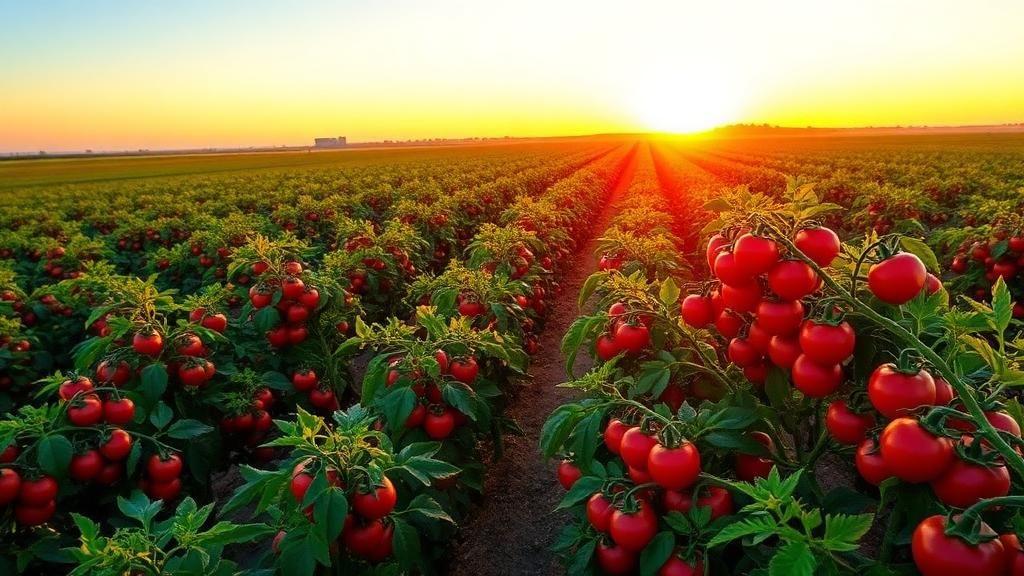
To better understand the subject, let’s look at the real-world experience of leading farmers. In trial plots where half were fed with potassium chloride and the other half with “Mihan Zaj” Sulfate of Potash, the results were astonishing. In the section fed with sulfate of potash, not only did the tomato crop tonnage increase by 18%, but the incidence of fruit cracking was reduced by half, and their color and firmness index (the main criterion for export quality) improved significantly. This difference in quality allowed the farmer to sell their product at a 20% higher price. These numbers clearly show how a slightly higher initial cost for a high-quality fertilizer turns into a manifold profit at the end of the season.